
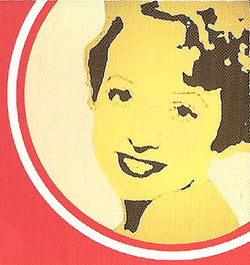


1920s Vintage Butterick Sewing Pattern 1346 Uncut Plus Size Flapper Coat 40 Bust
Original 1927 Butterick Pattern No. 1346 - Straight-Line Coat
Original 1927 Butterick Pattern No. 1346 for a straight-line coat designed for women and young girls. This late-1920s design hangs in a clean, unfitted line from the shoulders, with a low buckled belt, welt pockets, cuffed sleeves, and a collar that can be worn open or buttoned high. It may be made lined or unlined in a longer or shorter length. Factory Folded and Unused.
Quick Facts
- Pattern Number: Butterick No. 1346
- Year: Dated 1927, found in Butterick Quarterly, Spring and Early Summer 1927, Page 54
- Garment: Straight-Line Coat for Women and Young Girls
- Size: 40" Bust, 42½" Hip
- Condition: Factory Folded
Design
Butterick Pattern 1346 offers four looks from one straight-line coat. Views A, B, and D are cut in the longer length, about 44 inches at the back in this size, and View C in a shorter length of about 39 inches. The collar may be worn open, buttoned up close at the throat, or wrapped softly in View D, and a narrow belt buckles low at the hip over welt pockets. Collars and cuffs may be finished with rows of stitching in crochet silk or metallic thread, and View C carries an embroidered design adapted from Butterick transfer 10438. Outlet seams allow the hips to be let out 1½ inches. Butterick suggested cashmere, camel's hair twill, broadcloth, wool crepe, flannel, homespun, plaids, or silk and wool broché, lined in crepe de Chine or silk crepe, or in camel's hair twill for warmth.
A Moment in Fashion History
By 1927, women's coats followed the same long, straight line as the frocks beneath them, hanging from the shoulders with the waist dropped to a low belt at the hip. Coats and frocks were often planned as ensembles, and this envelope suggests lining the coat in the frock's own fabric or a harmonizing color when worn together. This design appears in our own copy of the Butterick Quarterly for Spring and Early Summer 1927, on page 54, beside two companion coats under a heading presenting the Paris mode in wraps. It sold for 45 cents and included Butterick's Deltor, the illustrated guide to cutting and sewing that set Butterick patterns apart in the 1920s.
Illustration
The cover illustration has been digitally restored and enhanced by Judy Yates to highlight the original fashion artwork while preserving the character and artistry of this historic Butterick pattern envelope.


